Insights / Note
How we use AI in design and developmentWhere it helps, where not
We use AI in our work and we say so. This note sets out where it helps, where we keep it out, and what a person checks before anything reaches you.
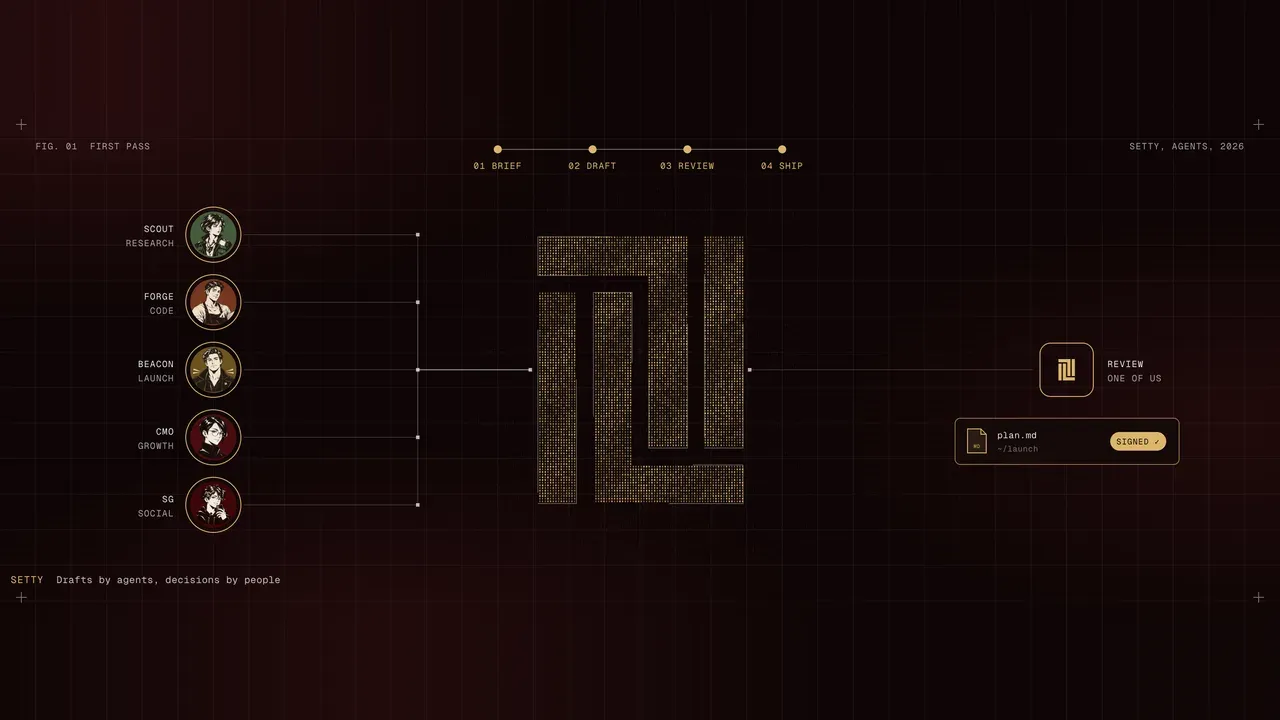
SettyDrafts by agents, decisions by people
We use AI for research synthesis, first drafts of code and some scenes in launch films. It stays out of product decisions, final copy and design taste. And nothing reaches you, or your users, until a person on our team has reviewed it.
Why we write down how we use AI
In Stack Overflow’s 2025 Developer Survey, 84% of respondents said they use AI tools or plan to. We use them too. If you are thinking of hiring us, you may well wonder whether you can trust work that a model touched. The answer depends on which part of the work you mean, so we would like you to know exactly where we use it before we start.
The agents we work with
Most of the AI work in our studio runs through Setty, a set of agents we built and run ourselves. Three lead agents split the work, and each has specialists with one narrow job. Whatever an agent makes lands in a review queue first, where one of us approves it or sends it back.

Lead agent
Launch
Takes client products from idea to launch, along The Launch Path.

ScoutDiscovery
Runs intake, the Relaunch audit and the research: where your product stands, your competitors, what your users say. The other agents work from its files.

ForgeBuild
Drafts product scope, UX flows, interface designs and code, from the idea to a working product.

MuseBrand
Drafts brand strategy, identity and assets: positioning, voice, logo, color, type and usage rules.

BeaconLaunch
Prepares the launch plan, the site, the film, your reports, meeting notes and the handover.

SecurityCode
Scans the code as it changes for vulnerabilities, leaked keys and risky dependencies, brings each fix as a pull request and checks it closed.

Lead agent
CMO
Grows our own brands. It does not work on client projects.

AtlasStrategy
Positioning, audience, brand voice, competitors, trends, and the plan the other agents work from.

LumenSearch
Visibility in Google and in AI search: technical SEO, the blog, content refreshes and citations in AI answers.

OrbitStore
App Store and Google Play: keywords, metadata, screenshots, reviews and replies.

SparkAds
Paid channels: campaign plans, targeting, budget and bid suggestions, and reading the results. A person starts any spend.

RelayOutreach
Email and relationships: newsletters, lifecycle email, press, podcasts, partners and directories.

LedgerMeasurement
Analytics, attribution, revenue, the weekly report, and conversion on landing pages, paywalls and onboarding.

Lead agent
SG
Runs organic social for our own brands, working from the CMO's facts, voice and assets.

PulseSocial
Accounts, the posting schedule, posts, comments, and communities such as Reddit, Hacker News and Product Hunt.

FrameStudio
Video, motion and ad creative, made from the real interface and the brand's assets.
Where it helps
In the first weeks of a project we read a lot: reviews of the tools your users have today, interview notes, competitors’ sites and help pages, your own call recordings. AI helps us sort and summarize that pile so we can see patterns sooner. It does not replace reading. Anything we act on, we check against the source, and every claim in a document we give you points back to where it came from.
We use AI assistants to write first drafts of code: a data migration, a test, the boilerplate around a new screen. Every line is then read and reviewed by a person, the same way we review code a colleague wrote, and it goes through the same tests before it reaches a build. The engineer who merges it is responsible for it, whoever typed it first. Developers have reason to be careful here: in the same Stack Overflow survey, more of them said they distrust the accuracy of AI tools (46%) than trust it (33%).
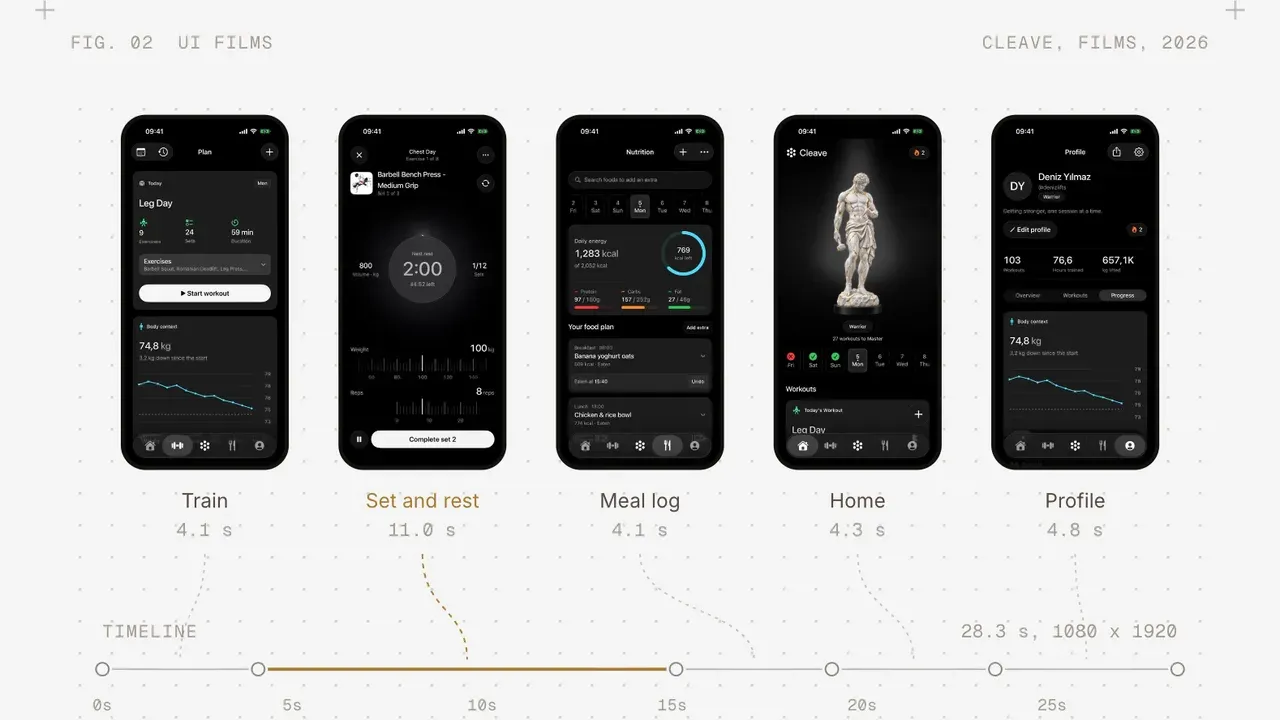
In the Launch stage we sometimes use generative video and image models, such as Kling for motion and image models for frames and scenes, to build parts of a launch film: a place, a mood, a shot we could not film. The product itself is never generated. The screens in your film are recorded from the real app, so what people see on launch day is what they will get when they download it.
Where we keep it out
What your product is, who it is for, and what goes above the MVP line are decided by people, with you, in writing. A model can list options. It cannot know your users, your runway or what you are willing to bet on.
The words on your site, in your app and in your launch film are written and edited by us, and signed off by you. We may use a tool to check grammar or try a few versions of a sentence, but the copy that ships is chosen and finished by a person.
Layout, type, color and the feel of an interaction are judgment calls, and we make them ourselves. We do not hand the look of your product to a generator.
Nothing reaches you, or your users, that a person on our team has not looked at and is willing to put their name to. That covers code, copy, images and film. Google’s own guidance on AI-generated content asks the same of anyone publishing: check and review it by hand for accuracy before it goes out.
A model can list options. It cannot know your users, your runway or what you are willing to bet on.
Your material
[Confirm before publishing: we only use AI tools with settings that do not train on your material, and we keep your confidential documents out of tools that would.]
[Confirm before publishing: if you would prefer we did not use AI on your project, or on part of it, tell us at kickoff and we will plan around it.]
What it means for you
In practice AI saves us time on the parts of the work that are mostly reading and typing. We spend that time on the parts that need judgment: the MVP line, the review of every change, the weekly build you click through. We stay responsible for all of it, whichever tools were open at the time.
If you have questions about how a tool would be used on your project, ask us when you get in touch, and we will show you. For the full path a project takes, read From idea to launch.